

It is one of the most disorienting sentences in modern healthcare. You are exhausted, foggy, bloated, anxious, gaining weight you cannot shift, and the results come back: everything is normal. The implication, sometimes stated and sometimes just felt, is that the problem must be in your head, or that this is simply ageing, or stress, or what you should expect.
You are not imagining it. In most cases the tests were not wrong. They were just answering a different question from the one you were asking. Understanding that difference is the single most useful shift you can make in taking back control of your health.
Normal means “not diseased,” not “well”
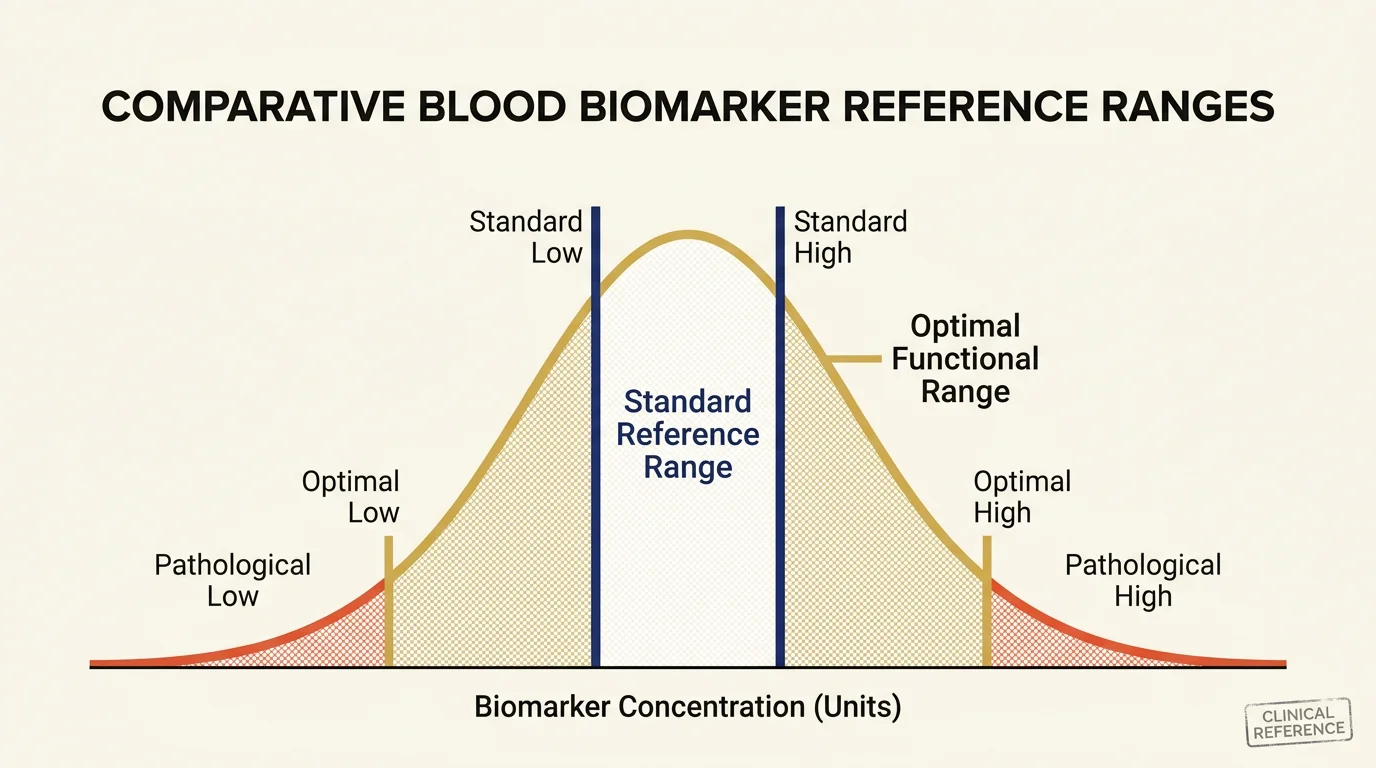
Standard blood tests are built to do one job well: detect disease. The laboratory reference range that decides whether a result is flagged is, in simple terms, the range that covers most of the population being tested. If your result falls inside it, you are told it is normal, meaning you do not have a diagnosable disease for that marker.
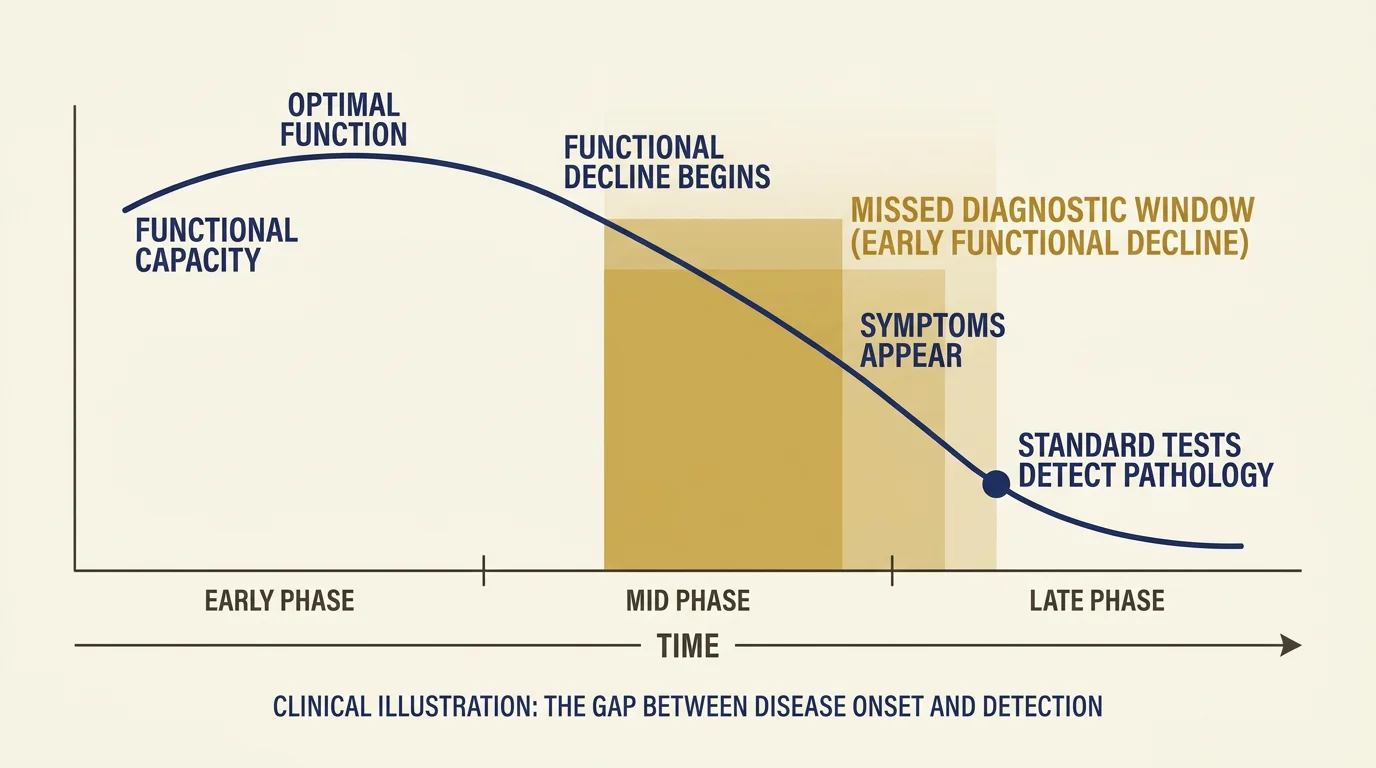
But “not diseased” and “functioning well” are not the same thing. There is a wide zone between frank disease and genuine health, and an enormous amount of chronic dysfunction lives in that zone. A thyroid marker can sit inside the range while you have every symptom of an underactive thyroid 5. A ferritin can be “normal” and still be far too low for good energy. A B12 can look adequate on the total while the active, usable form is depleted 2. A fasting glucose can be acceptable while your insulin, which is rarely tested, has been climbing for years.
The reference range was never designed to tell you whether you are thriving. It was designed to catch disease. Reading it as a verdict on your wellness is the most common reason genuinely unwell people are told they are fine.
Optimal is a different question
Functional medicine asks a different question of the same blood. Not “is this diseased?” but “is this functioning well?” That means reading each marker against an optimal range, the level associated with feeling and functioning your best, rather than just against the broad disease range.
The gap between the two is where the answers usually are. A TSH of 4.8 is inside most laboratory ranges but well above the optimal of around 2.0, and a person there can feel deeply unwell 1. The difference is not a trick or a lower bar. It is the difference between asking whether you are sick and asking whether you are well, and those are genuinely different questions that deserve different thresholds.
The tests that weren’t run
The second reason normal results mislead is that the standard panel is narrow. It was not built to investigate complex chronic symptoms, so it leaves out the very things that explain them.
It rarely measures the active forms of nutrients, only the totals. It usually checks TSH alone rather than the full thyroid picture with conversion and antibodies. It almost never looks at mitochondrial function, the actual machinery of cellular energy 4. It does not assess the gut barrier, the microbiome, or the inflammatory markers that come from the gut, despite the gut housing the majority of the immune system 3. It does not measure detox and methylation capacity 6. These are not exotic concerns, they are the common drivers of fatigue, brain fog, and stubborn symptoms, and they sit outside what a routine panel was ever designed to find.
So when the standard tests come back clear, it often means only that the few things they measured, measured against disease ranges, were not frankly abnormal. It does not mean the cause of your symptoms was looked for and ruled out. Usually it was never looked for at all.
Why this matters more than it sounds
This is not an argument against your GP or against standard medicine, which is excellent at what it is built for: finding and treating disease. It is an argument for asking the right question. If you have been told your tests are normal but you know your body is not, the productive next step is not to accept the verdict or to doubt yourself. It is to test the right things and read them against the right benchmark.
That usually means a fuller picture: a blood panel read against optimal ranges, a stool test if there are gut or immune symptoms, and an organic acids test if energy, mood or detox are involved. Read together and against the question “is this working well,” these tend to reveal what the basic panel could not. The data was always there to be found. It just needed someone to ask the right question of it.
Test to clarify, not to confirm anxiety. The goal is not more testing for its own sake, it is the right testing, interpreted properly, so that “normal” stops being a dead end and becomes a starting point.
Where to start
How to read your own results, what optimal actually looks like, and the testing that finds what standard panels miss, are all in my book.
For complex cases, I take a small number of telehealth patients each year, across Australia and worldwide.
FAQ
Does this mean my doctor was wrong?
What's the difference between normal and optimal ranges?
What should I test if my standard bloods are normal?
Is the optimal range just a lower bar to sell me things?
References
- 1 Negro R, Schwartz A, Gismondi R, et al. Increased pregnancy loss rate in thyroid antibody negative women with TSH levels between 2.5 and 5.0 in the first trimester. J Clin Endocrinol Metab. 2010;95(9):E44-E48. view source
- 2 Holotranscobalamin (active B12) and methylmalonic acid as functional markers of B12 status; total serum B12 is a relatively insensitive marker. (Holotranscobalamin diagnostic literature, PMC4681207.) view source
- 3 Vighi G, Marcucci F, Sensi L, et al. Allergy and the gastrointestinal system. Clin Exp Immunol. 2008;153(S1):3-6. view source
- 4 Mullur R, Liu YY, Brent GA. Thyroid hormone regulation of metabolism. Physiol Rev. 2014;94(2):355-382. view source
- 5 Liontiris MI, Mazokopakis EE. A concise review of Hashimoto thyroiditis and the importance of iodine, selenium, vitamin D and gluten on the autoimmunity and dietary management of HT patients. Hell J Nucl Med. 2017;20(1):51-56. view source
- 6 Fasano A. Zonulin and its regulation of intestinal barrier function. Physiol Rev. 2011;91(1):151-175. view source