

This is the sentence I hear more than any other. "I'm doing everything right and I'm still getting worse." Clean diet, good supplements, exercise, sleep, stress management, all the things you are supposed to do. For a while it worked, or seemed to. Then it stopped. And the natural conclusion, the one most people reach, is that they are not trying hard enough, so they tighten the diet further, add more supplements, train harder, and feel worse still.
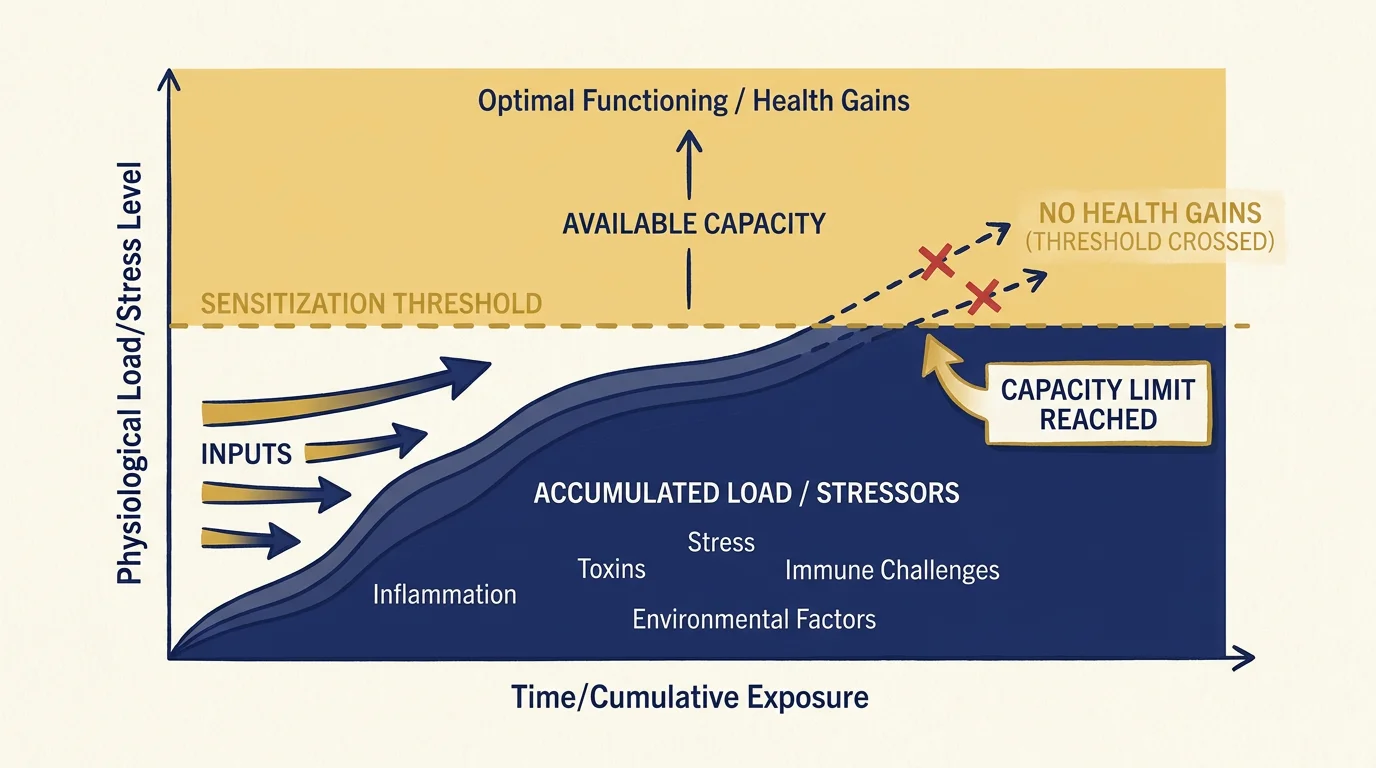
Here is the truth after more than a decade of watching this pattern. You are almost certainly not failing from lack of effort. You are running into something the effort cannot fix, because the problem is not how hard you are trying. It is that the same inputs land completely differently depending on the state of the body receiving them, and that the order in which you do things matters more than the doing.
Effort is not the variable
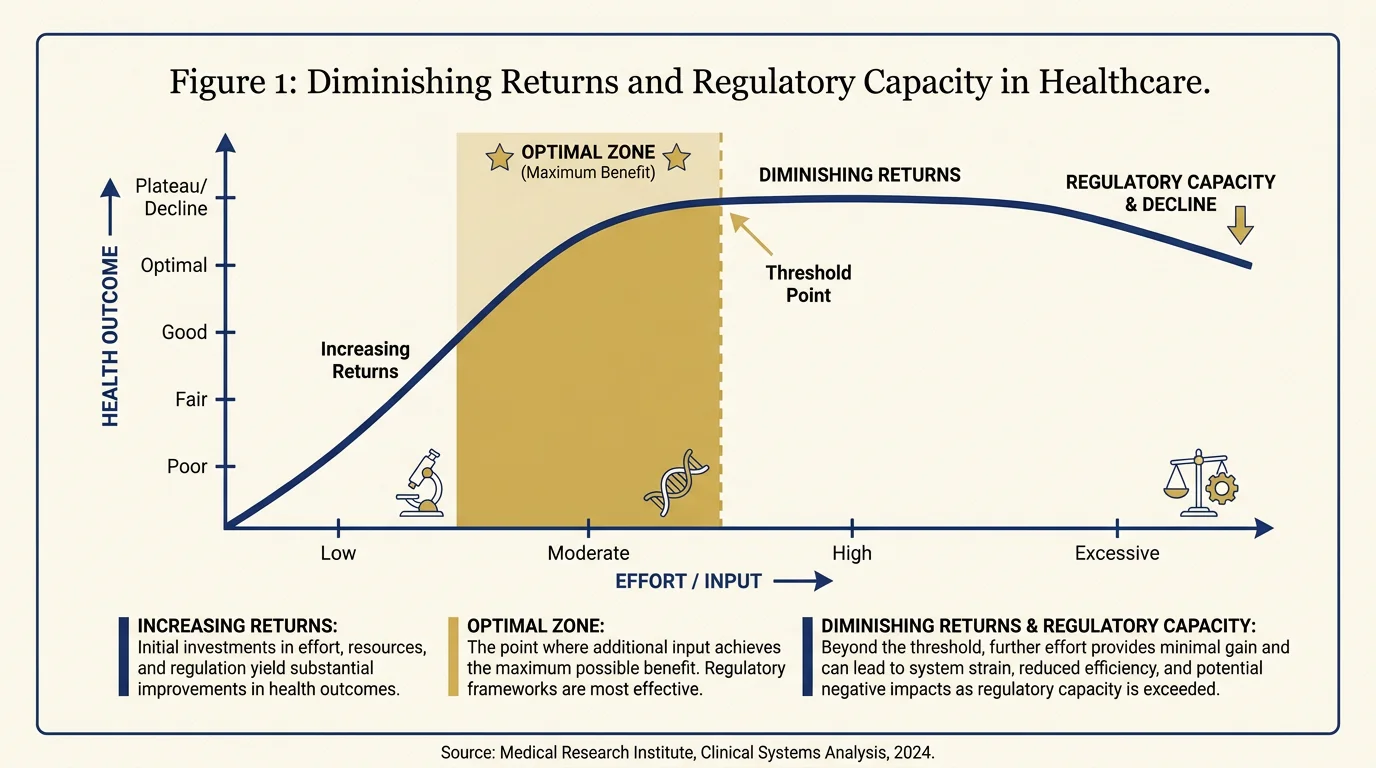
The assumption underneath “try harder” is that health is a dose-response problem, that more good inputs produce more good outcomes. For a body in reasonable shape, that roughly holds. For a body that has been pushed past a certain point, it stops holding, and can reverse. The same green smoothie, cold plunge, fasting protocol or supplement that helps a resilient body can overwhelm a depleted one 1.
This is why two people can do exactly the same things and get opposite results, and why the things that used to work for you stop working. Nothing about the inputs changed. What changed was your body’s capacity to process them. Once you see that, the whole “try harder” project reveals itself as solving the wrong problem. You do not need more inputs. You need to restore the capacity to handle the inputs you are already giving yourself.
When the body stops responding
There is a tipping point where a body that has been absorbing stress, infection, poor sleep, inflammation and toxic load for long enough crosses from coping to not coping. Before it, the body buffers a remarkable amount and you feel fine. After it, the same load produces symptoms, and inputs that should help can backfire. This is well described in the stress-physiology literature as the point where the systems that maintain stability under load become overwhelmed and start producing dysfunction instead 12.
Beyond that point, the rules change. Healthy food can trigger reactions. Exercise drains rather than builds. Supplements cause symptoms. It looks like the body is malfunctioning, but it is doing exactly what an overloaded system does, and no amount of additional effort fixes an overload, because effort is more load. The way back is not to push harder. It is to reduce the load and rebuild the capacity, in that order.
What to do instead
If you are doing everything right and getting nowhere, the answer is not a new diet or a longer supplement list. It is three shifts. First, stop adding and start mapping, find out what state your systems are actually in, because you cannot sequence what you have not measured. Second, reduce the load before adding more inputs, give the overwhelmed system room to recover. Third, work in order, foundations first, downstream systems last. Effort applied in the right sequence to a body with restored capacity is what finally moves the needle. It is almost never about trying harder.
Where to start
Why order creates outcomes, and how to find your own sequence, are the heart of my book.
For complex cases that have not responded to effort, I take a small number of telehealth patients each year, across Australia and worldwide.
FAQ
Why did the things that used to work stop working?
Am I just not disciplined enough?
What does it mean that order matters?
How do I know what order to work in?
Is this just another supplement plan?
References
- 1 McEwen BS. Stress, adaptation, and disease: allostasis and allostatic overload. Ann N Y Acad Sci. 1998;840:33-44. view source
- 2 McEwen BS, Stellar E. Stress and the individual: mechanisms leading to disease. Arch Intern Med. 1993;153(18):2093-2101. view source
- 3 Fasano A. Zonulin and its regulation of intestinal barrier function. Physiol Rev. 2011;91(1):151-175. view source
- 4 Vighi G, Marcucci F, Sensi L, et al. Allergy and the gastrointestinal system. Clin Exp Immunol. 2008;153(S1):3-6. view source
- 5 Holotranscobalamin (active B12) and methylmalonic acid as functional markers of B12 status; total serum B12 is relatively insensitive (holotranscobalamin diagnostic literature). view source
- 6 Liew SC, Gupta ED. MTHFR C677T polymorphism: epidemiology, metabolism and the associated diseases. Eur J Med Genet. 2015;58(1):1-10. view source