
An autoimmune diagnosis usually comes with a particular message: your immune system has turned on you, the cause is unknown, and the plan is to suppress it for life. Whether it is Hashimoto's, rheumatoid arthritis, lupus, psoriasis, an inflammatory bowel condition or one of the many others, the framing is the same. Your body is attacking itself, and there is nothing to do but manage it.
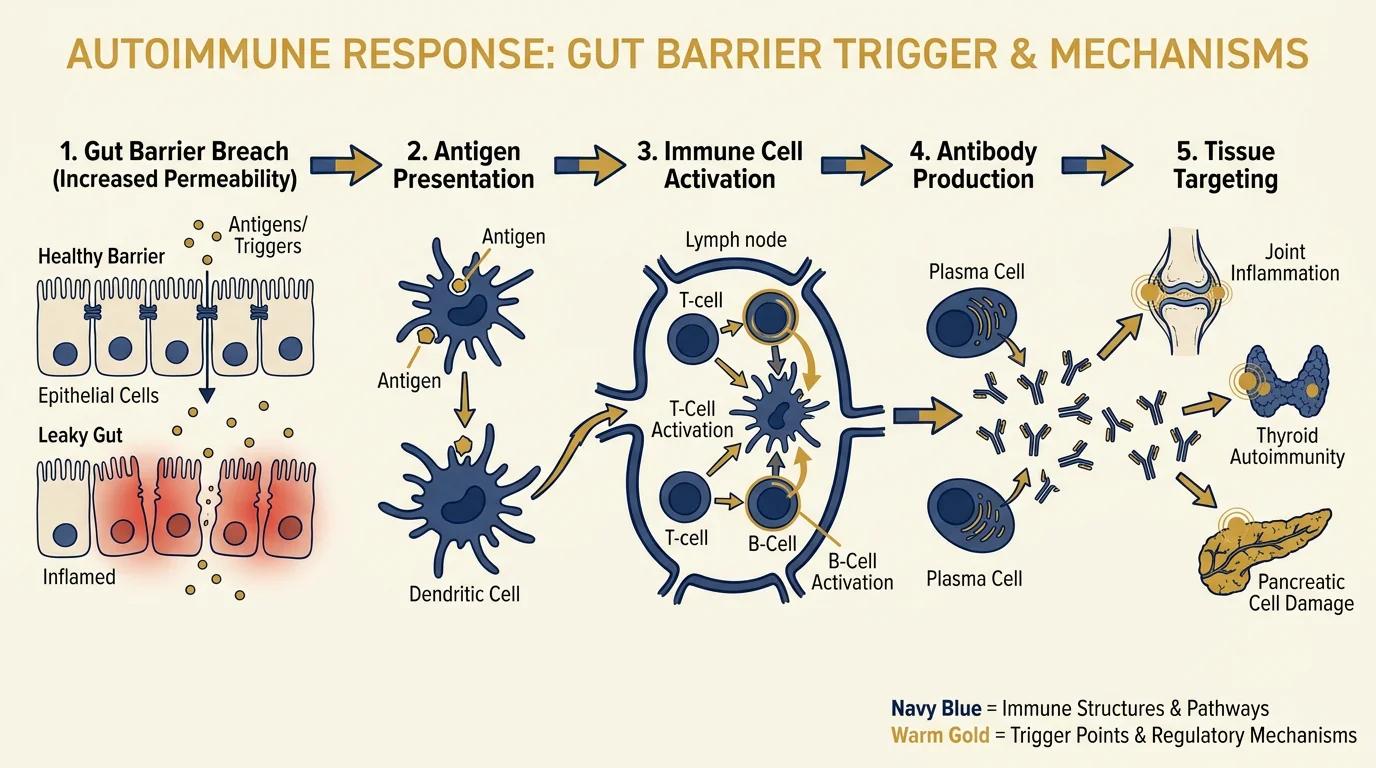
I see it differently, and so does a growing body of research. The immune system is not malfunctioning at random. It is responding, often correctly, to something that is genuinely driving it: a gut barrier that is letting through what it should not, chronic inflammation, an infection, a toxin, a nutrient picture that has tipped immune regulation off balance. The genetic susceptibility is real and does not disappear. But what determines whether that susceptibility becomes active disease, and how active it stays, is the load of drivers sitting on top of it, and a lot of those can be changed.
The immune system is responding to something
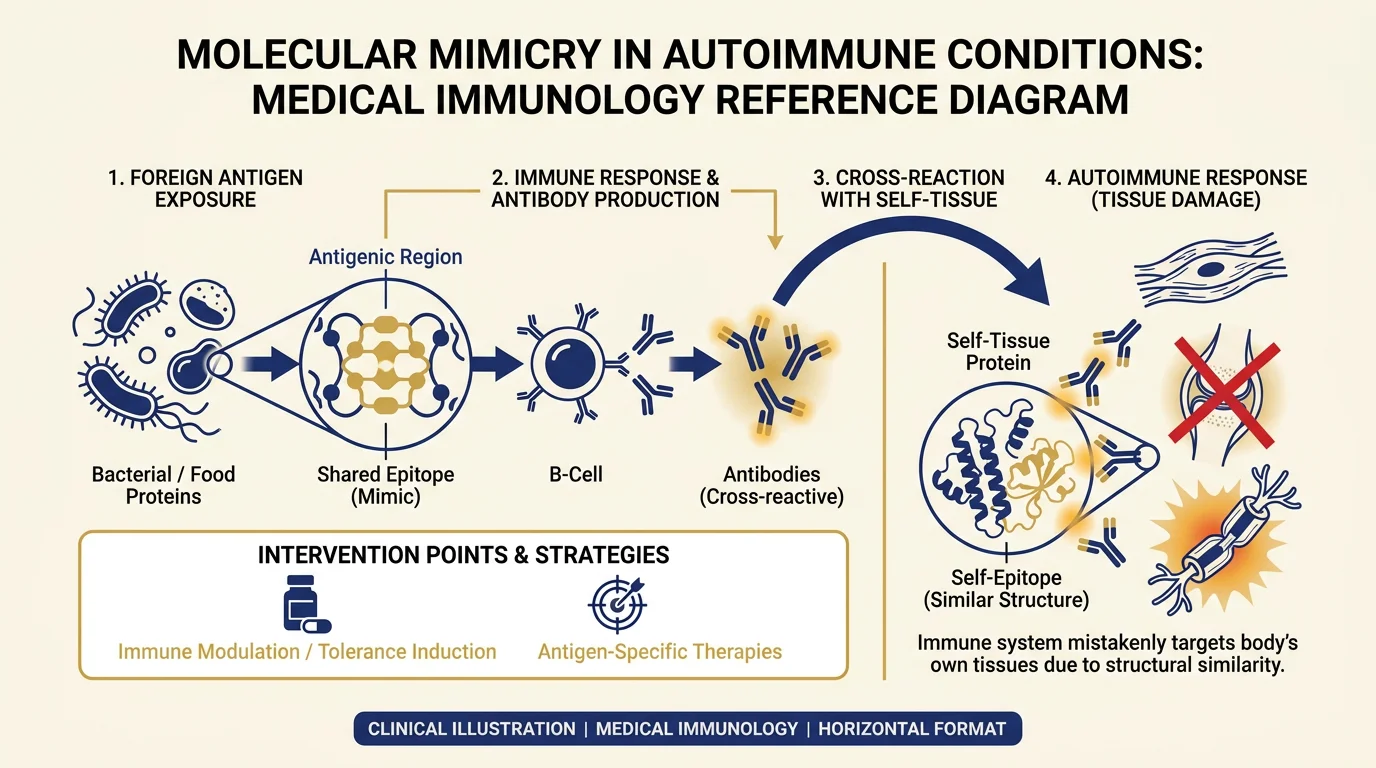
Autoimmunity needs more than a gene. It needs a trigger and, in most current models, a leaky gut barrier. The majority of the immune system lives in the tissue around the gut, so the gut is where a great deal of immune behaviour is set 1. When the gut barrier is intact, the immune system sees what it should. When the barrier is leaking, food proteins and bacterial fragments cross into the bloodstream, and the immune system reacts to them. Through a process called molecular mimicry, where those fragments resemble the body’s own tissues, the immune response can spill over onto the body itself. This is a leading explanation for how autoimmunity gets going and keeps going 23.
So the autoimmune attack is downstream of drivers you can often identify: intestinal permeability, the specific triggers crossing it (gluten is a common one), chronic inflammation, infections, and nutrient deficiencies that impair immune regulation 4. The immune system is doing its job in a body that is sending it the wrong signals. Change the signals and the attack often calms.
A real case
Sarah arrived with an autoimmune diagnosis and a decade of symptoms that had been managed with suppression. Her testing showed why suppression was never going to resolve it. Her gut barrier was wide open, with a zonulin of 185 against a normal below 107. Her gut inflammation was five times the healthy threshold, with a calprotectin of 285. Her gut’s own immune defence was almost offline, with secretory IgA at 142 against an optimal 510 to 2040. She had overgrowth of two inflammatory bacteria, and body-wide inflammation with a CRP of 8.2 against an optimal below 1.0.
Her immune system was not malfunctioning. It was responding, correctly, to a gut that had been sending distress signals for over a decade. Rather than suppress the response, we addressed what was driving it: we repaired the gut barrier, cleared the overgrowth in sequence, reduced the inflammatory load with a whole-food approach, and reintroduced foods carefully, which identified gluten and dairy as her triggers. Six months on, her zonulin had fallen to 68, her calprotectin to 22, her CRP to 0.6, and her secretory IgA had restored to 890. The autoimmune flares stopped. We did not cure the underlying susceptibility, but we removed the load that was driving the attack, and the immune system settled.
What this means for you
This does not mean autoimmune disease is your fault, or that suppression is always wrong, sometimes it is genuinely necessary, and you should never change prescribed treatment without your doctor. What it means is that there are usually drivers underneath the diagnosis that can be found and addressed, and that doing so can reduce the load on an overactive immune system. The most useful questions are: is the gut barrier intact, what is crossing it, what is the inflammatory load, are there infections or toxins, and is the nutrient picture supporting immune regulation. Genes determine vulnerability. Environment and load determine whether that vulnerability becomes illness, and how much of it you carry 5.
Where to start
How autoimmunity develops, and the sequence that calms it, are in my book.
For complex autoimmune cases, I take a small number of telehealth patients each year, across Australia and worldwide.
FAQ
Can autoimmune disease be reversed?
What does the gut have to do with autoimmunity?
Is gluten really a problem in autoimmune conditions?
Should I stop my medication if I address the root causes?
My markers are 'normal' but I have autoimmune symptoms. What now?
References
- 1 Vighi G, Marcucci F, Sensi L, et al. Allergy and the gastrointestinal system. Clin Exp Immunol. 2008;153(S1):3-6. view source
- 2 Fasano A. Leaky gut and autoimmune diseases. Clin Rev Allergy Immunol. 2012;42(1):71-78. view source
- 3 Vojdani A, Kharrazian D, Mukherjee PS. The prevalence of antibodies against wheat and milk proteins in blood donors and their contribution to neuroimmune reactivities. Nutrients. 2014;6(1):15-36. view source
- 4 Fasano A. Zonulin and its regulation of intestinal barrier function. Physiol Rev. 2011;91(1):151-175. view source
- 5 McEwen BS. Stress, adaptation, and disease: allostasis and allostatic overload. Ann N Y Acad Sci. 1998;840:33-44. view source
- 6 Liontiris MI, Mazokopakis EE. A concise review of Hashimoto thyroiditis and the importance of iodine, selenium, vitamin D and gluten on autoimmunity and dietary management of HT patients. Hell J Nucl Med. 2017;20(1):51-56. view source